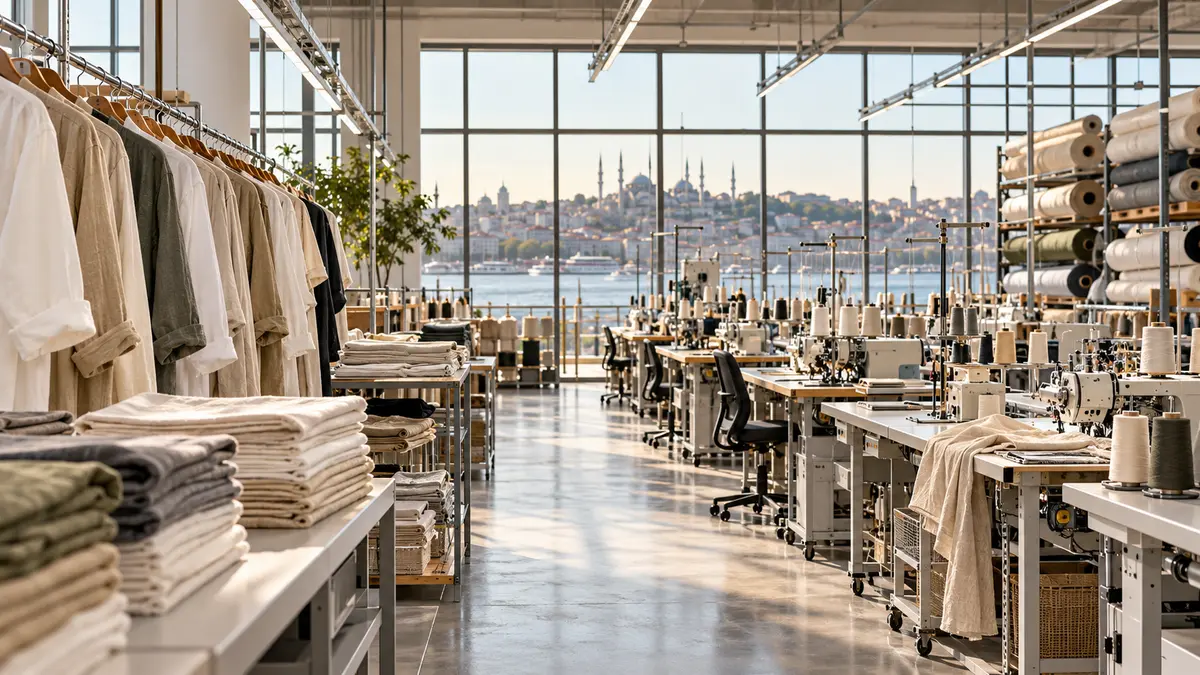
For a South African clothing reseller, corporate-clothing distributor or print shop, a low unit price is only one part of a workable order from TURKIYE. The garment needs the right fit, a repeatable fabric specification, a usable size-and-colour mix and a realistic delivered cost. A sample that looks good on a screen is not enough to approve a production batch.
This guide covers new, ordinary adult apparel, such as blank T-shirts, golf shirts and casual layers. Used clothing, protective workwear and specialist garments need separate checks. It is a procurement checklist, not a customs ruling or a claim that any unnamed supplier has passed inspection.
Separate stock garments from custom production
South African trade pages use terms such as blank apparel, golfers, branding and wholesale accounts. Poly Nation's wholesale range distinguishes blank garments and decoration services for trade buyers. These are useful categories for writing a sourcing brief; they do not establish stock, quality or minimum quantities at a different supplier in TURKIYE.
First decide which buying route you need:
- Stock blanks: existing garments in available sizes and colours, with decoration handled separately or quoted as an extra service.
- Private-label production: a defined garment specification, approved labels, size set and production quantity.
- Finished branded garments: an authorised design and agreed printing or embroidery, with a finished sample approved before bulk production.
Ask for minimum quantities by style, colour and size, not only a headline minimum for the entire order. Check whether the quoted minimum is for existing stock, a special fabric colour or a new production run. A mixed carton of ready-made garments and a custom-manufactured range are not interchangeable quotations.
Approve measurements, not just S, M and L
A letter size is not a measurement specification. T-Shirts Joburg's oversized range illustrates the local use of centimetre measurements for width, height and sleeve measurements. Do not copy that particular chart onto another garment or assume that a supplier's European size corresponds to the fit your customers expect.
Give the manufacturer a measurement sheet with diagrams showing where each measurement is taken. Specify whether widths are measured flat, how the garment is laid out and the permitted tolerance. For a repeat order, retain a labelled reference sample and record its style, fabric and approval date.
Approve a size set rather than one middle-size sample when the order covers a broad range. Try the samples against the intended fit: regular, fitted and oversized garments can share a letter label while having very different measurements. Record the required number in each size and colour so that an attractive total quantity does not hide an unusable assortment.
Make the fabric and finish testable
Request a written fibre composition, fabric construction, weight in grams per square metre, colour reference and finish. Fabric weight alone does not establish softness, opacity, durability or suitability for printing. A cotton-rich blend and a pure-cotton garment should not be treated as identical because their advertised weights match.
Agree a sample review that reflects intended use. Check seam appearance, loose threads, neckline shape, label placement and consistency between pieces. Where washing matters, agree the wash method and the acceptable change in measurements and appearance before approving bulk production. A buyer's sample check is not a substitute for a laboratory test when a particular performance claim needs one.
If garments will be printed or embroidered locally, ask the decorator to assess the actual fabric and a finished sample. Confirm artwork rights, print position, colour reference and any restrictions on the selected process. Do not advertise protective, flame-resistant or other specialist performance unless the specific product has the necessary substantiation.
Confirm import requirements before committing
Ask the South African importer or appointed customs adviser to confirm the correct tariff classification, registration requirements, origin documentation and any product-specific controls for the actual garments. Descriptions such as “clothing” or “T-shirts” are not enough to calculate a dependable landed price.
The SARS importer-registration guidance explains the registration route. SARS tariff guidance should be consulted for classification and duty questions. Do not assume a duty rate or preferential treatment merely because the supplier is based in TURKIYE.
Keep new apparel and used clothing separate in the brief. Import-control rules differ, and a general sourcing article cannot determine whether a particular consignment requires a permit. Confirm the current position using ITAC’s import-control guidance and the appointed customs adviser before shipment. Use the NCC import-labelling guidance to agree the required labelling with the responsible local reviewer before labels are printed, including fibre content, country of origin and care information, and check whether any importer details are needed; do not treat a generic foreign label as automatically suitable for sale in South Africa.
Compare the same delivered order
Ask each supplier to quote the same specification, size-and-colour quantities and named delivery point. State the agreed Incoterms rule and location, and clarify who handles export formalities, freight, insurance where applicable, import clearance and final delivery. Do not compare an ex-factory figure with a delivered quotation as if they cover the same service.
Build a costing sheet that separates garment cost, sampling, decoration, labels, packing, transport, customs charges and applicable taxes. The import tax calculation should come from the current customs treatment of the shipment, not a flat percentage added to a supplier's retail price. Include a realistic allowance for local handling and inspection instead of assuming every charge is covered by freight.
| Detail to agree | Evidence to request |
|---|---|
| Size and colour quantities | Approved assortment sheet |
| Fabric and construction | Written specification and reference sample |
| Fit and measurement tolerances | Signed measurement sheet and size set |
| Decoration and labels | Approved artwork and finished sample |
| Shipment contents | Packing list with style, size and colour breakdown |
| Defects and shortages | Inspection method and agreed remedy |
| Timing and delivery | Production milestones and named delivery point |
Keep the first order small enough to inspect and learn from where commercially practical. Agree when defects must be reported, what evidence is needed and how a replacement or credit would be handled. Require your written approval for any substitution in fabric, trims or colour before production continues.
Send a brief a supplier can answer
Prepare the garment style, intended adult customer, fabric specification, measurement sheet, colour references, quantities per size, branding needs and delivery destination. Separate must-have requirements from preferences and state the requested delivery window without treating an estimate as a guarantee.
Start with the South Africa sourcing hub and send the details through the sourcing enquiry form. Supplier matching and quotations are starting points for due diligence, not confirmation of stock, import clearance or product quality. Approval should follow the actual sample, documents and agreed commercial terms.